 News Note · IDAEO AI News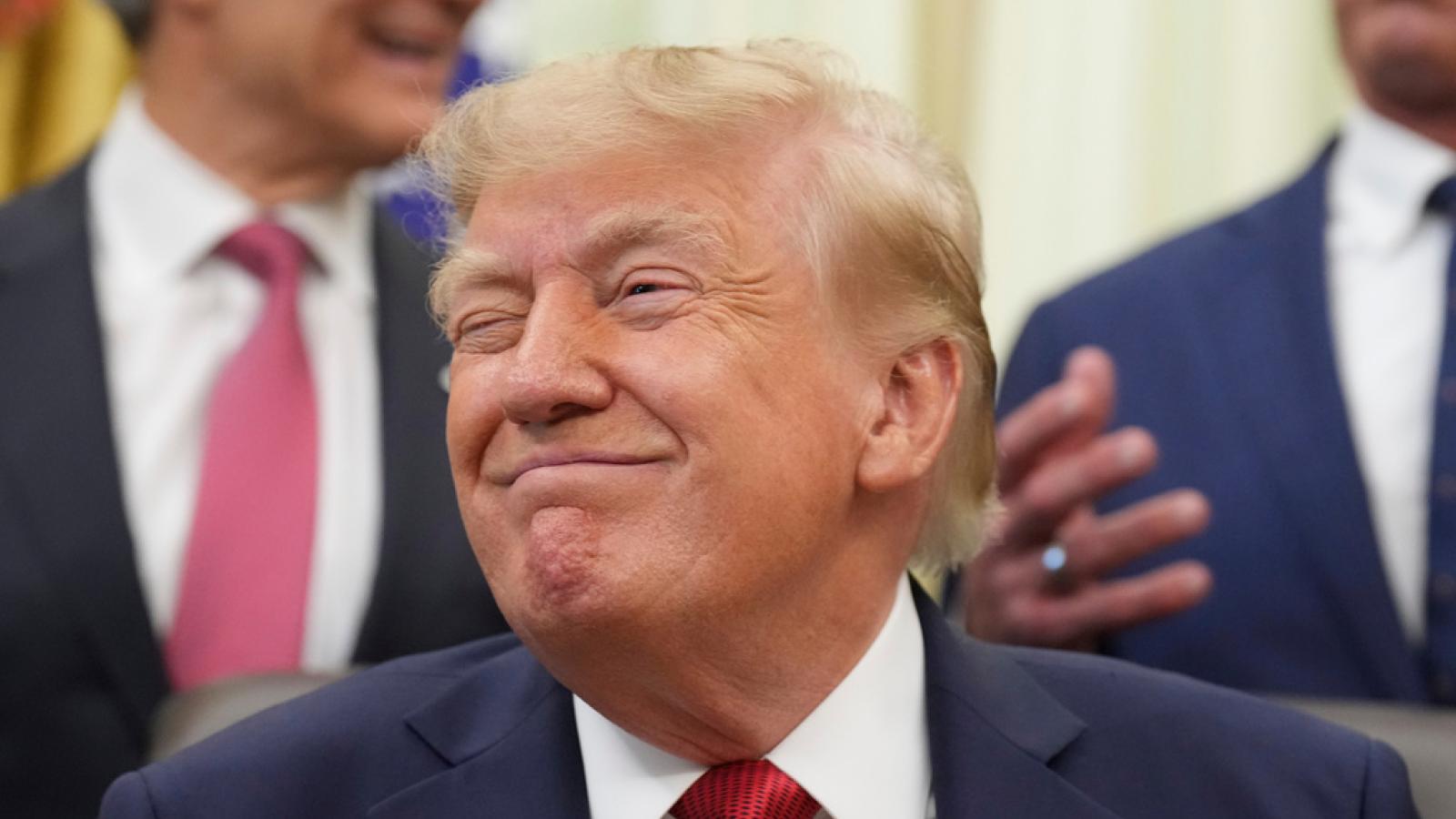
Story Text
Former US President Donald Trump announced he will form an 'AI Force' and appoint an AI 'czar,' following growing warnings about the risks of this emerging technology. In a social media post last Saturday, he stated his administration would 'never hinder or stifle' the industry 'in any way,' rejecting calls to slow down AI development until stronger safeguards are in place. His announcement comes amid a series of warnings about the potential dangers of AI, which have prompted calls for coordinated action on the technology's development. Trump did not provide details or a timeline for his plans. 'Artificial intelligence is the next industrial revolution, or the next internet, but with far deeper and larger-scale impacts—potentially accounting for 25% of our nation’s GDP,' he said on social media, adding that he wants the US to maintain its lead over China in AI. As the world’s two largest economies race to gain an edge in advanced technologies, AI has become a central issue in US-China competition, and Trump is expected to discuss it during his upcoming meeting with Chinese President Xi Jinping. Meanwhile, Trump said his administration would use existing criminal and civil legal systems to crack down on anyone misusing AI. He also reiterated his previous claim that concerns about AI’s potential dangers are a 'hoax.' In recent weeks, current and former researchers have warned that the technology could endanger humanity—one even suggesting a greater than 10% chance it could 'kill all humans'—raising alarm. Major AI companies have been accelerating development of more advanced systems, including so-called 'superintelligence,' a theoretical technology smarter than humans. AI giants Anthropic, OpenAI, and Google—the developers of chatbots Claude, ChatGPT, and Gemini, respectively—have all disclosed incidents of security vulnerabilities or chatbots being used for 'malicious activities.' Dario Amodei, CEO of Anthropic, recently called for slowing down AI development and proposed industry-wide deceleration, regulation, and independent oversight of AI model development. OpenAI’s Sam Altman and xAI’s Elon Musk both said they agree with Amodei’s proposal. Jack Clark, co-founder of Anthropic, told the BBC that the industry might need a mandatory 'kill switch' verifiable by third parties. These warnings have prompted US lawmakers to propose legislation on the technology, but Altman said this week that Washington has struggled to keep pace with the rapid development of this new technology and how to regulate it. He said the public should have more confidence in AI companies’ ability to maintain safety. 'The world should believe we will do the right thing, because it’s the right thing to do, and we deeply feel the significance of this,' Altman said at a conference in San Francisco. In the UK, cross-party MPs and Lords have highlighted human rights risks posed by AI and argued that existing laws are insufficient to address the technology’s rapid advancement. The UK Parliament’s Joint Committee on Human Rights (JCHR) has issued a report calling for new AI legislation to 'address the scale and seriousness of such threats.' This article was originally written in English. We used AI to assist with translation, which was reviewed by BBC journalists before publication. Learn more about how we use AI.