Story Text
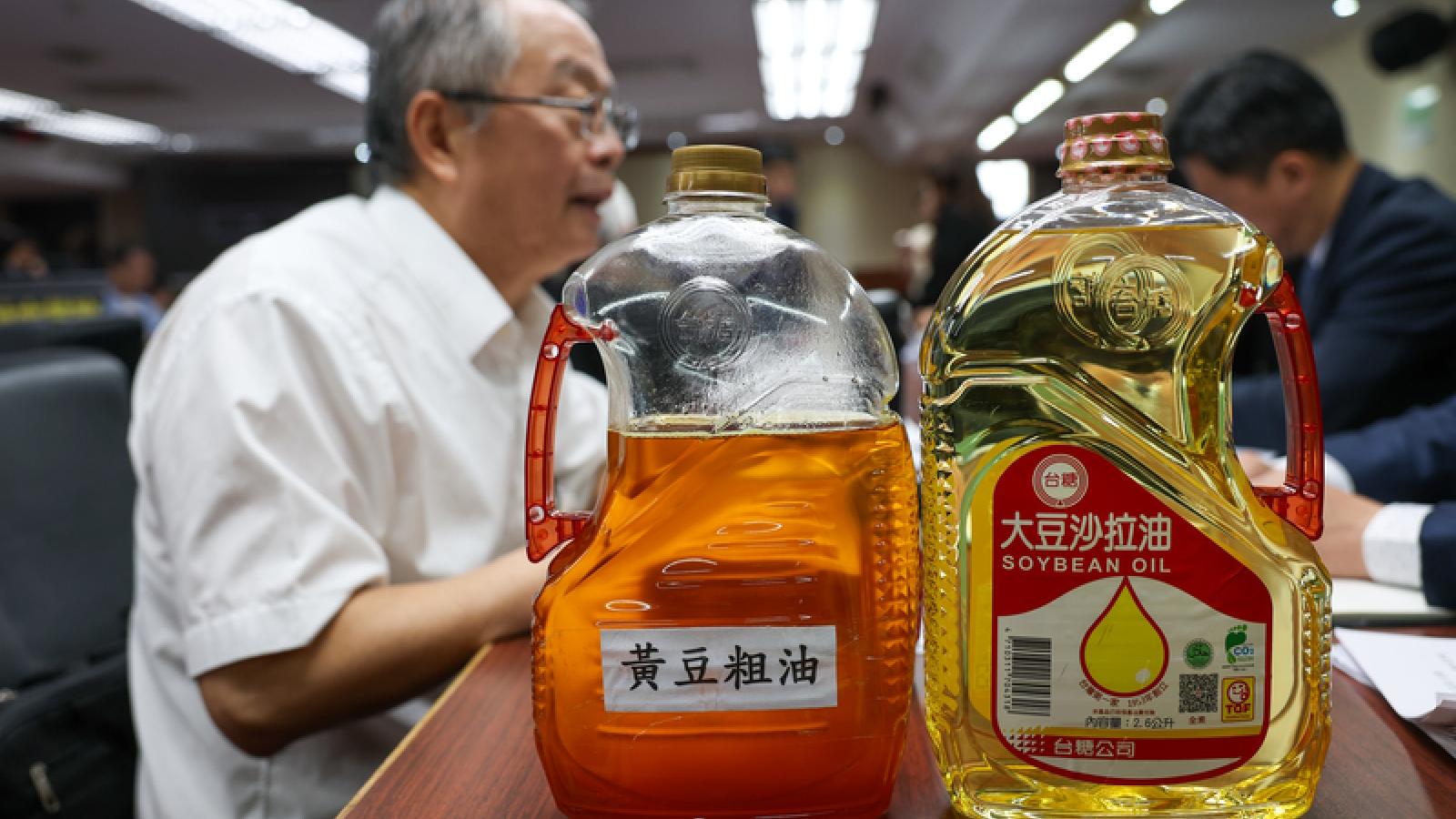
From Return Handling to the Debate on Food Safety Reporting SystemsThe core of a food safety system lies not only in holding violators accountable after the fact, but more importantly, in enabling regulatory authorities to intervene before harm spreads through timely information disclosure and risk warnings. However, after Taisugar's self-inspection revealed that crude rubber oil supplied by vendor Chung Lien Oils contained超标 levels of benzopyrene, it chose to reject and return the goods without simultaneously reporting to the competent authority, sparking significant public concern.On the surface, this incident appears to be an isolated food procurement case, but it actually involves multiple core issues within food safety legislation:Does the term 'product' under the current Food Safety and Hygiene Management Act (hereinafter 'Food Safety Act') include 'raw materials'?
When a food operator discovers that upstream raw materials pose a potential threat to hygiene and safety, are they immediately obligated to report? How should the principle of legality in administrative penalties be balanced with the preventive principle of food safety?
Can local self-governing food safety regulations supplement deficiencies in central laws? As a state-owned enterprise entrusted with public welfare responsibilities, does Taisugar bear a higher standard of public governance responsibility than ordinary businesses?
The interplay of these issues means this case cannot be judged solely on whether 'Taisugar broke the law,' but must be analyzed from three perspectives: legal interpretation, administrative responsibility, and institutional reform.After the incident, the central competent authority argued that the substance detected by Taisugar was 'raw material,' not a 'product' as defined in Article 7, Paragraph 5 of the Food Safety Act, and therefore there was no mandatory reporting obligation under current law. On the other hand, legal experts and some scholars argue that the Food Safety Act should be interpreted systematically and purposively—any raw materials, semi-finished, or finished products within the food supply chain that pose a potential threat to hygiene and safety should be included in the reporting scope.Thus, through public and governmental discussion, the central legal controversy has been clarified: Does the term 'product' in Article 7, Paragraph 5 refer only to final products, or should it also encompass raw and semi-finished materials?
This question not only involves statutory interpretation of the Food Safety Act but also touches upon the principle of legality in administrative penalties, the applicability of local self-governance regulations, and the public governance responsibilities of state-owned enterprises. The Executive Yuan subsequently proposed an amendment to the Food Safety Act precisely to address this systemic loophole, giving the case significant legal and policy implications.The Legal Definition Dispute Between 'Product' and 'Raw Material'Article 3, Paragraph 1 of the current Food Safety Act defines: 'Food: products and their raw materials intended for human consumption or chewing.' This adopts a 'broad definition of food,' including both 'products' and their 'raw materials' within the scope of 'food.' However, Article 7, Paragraph 5 only requires food operators to take immediate necessary measures and report to the competent authority upon discovering or becoming aware that a 'product' poses a potential threat to hygiene and safety, without explicitly listing raw or semi-finished materials. This has led to a major interpretive controversy in legal application: Does 'product' include 'raw materials'?
Currently, two main views have emerged in practice and academia:(1) Taisugar and the Central Competent Authority’s View: Strict (Restrictive) Literal InterpretationTaisugar, the Ministry of Health and Welfare, the Food and Drug Administration, and the Ministry of Economic Affairs argue that the term 'product' in Article 7, Paragraph 5 of the Food Safety Act should be limited to final products that have completed manufacturing and processing and are ready for consumer consumption, excluding unprocessed raw materials or semi-finished goods.According to this view, the crude rubber oil tested by Taisugar, supplied by Chung Lien Oils, is a procurement raw material that has not yet entered the refining process, nor has it entered Taisugar’s manufacturing workflow or market supply chain. Therefore, it does not constitute a 'product' as regulated under Article 7, Paragraph 5 of the Food Safety Act. Additionally, the benzopyrene limit standards announced under Article 17 of the Food Safety Act are primarily set for final edible oil products; crude rubber oil remains an unprocessed raw material and thus should not be directly subject to the same standards.From an administrative law perspective, this view is also grounded in the principle of legality in administrative penalties. Article 4 of the Administrative Penalty Act states that penalties for violations of administrative obligations are only permissible if explicitly stipulated by law at the time of the act. The prerequisites for administrative penalties should generally be strictly (restrictively) interpreted, and administrative obligations on the public should not be expanded through purposive or expansive interpretation. Therefore, the competent authority believes that, unless the parent law explicitly includes raw materials within the reporting obligations of Article 7, Paragraph 5, it should not impose such obligations on food operators through interpretation alone.In other words, the competent authority’s determination that Taisugar was not required to report is not a denial of potential food safety risks in the crude rubber oil, but rather based on the restrictive interpretation of the term 'product' and the principle of legality in administrative penalties. This interpretation only concerns Taisugar’s administrative penalty liability as a downstream purchaser and does not affect Chung Lien Oils’ food safety responsibilities as the manufacturer and supplier of the crude rubber oil. In other words, the same batch of crude rubber oil is a 'product' for Chung Lien Oils but 'raw material' for Taisugar—different legal statuses entail different obligations.(2) Legal and Academic View: Systematic and Purposive InterpretationContrary to the above, Chief Prosecutor Chen Hong-Da of the High Prosecutors Office (publicly stated on Facebook and cited by United Daily News and other media) and some scholars argue that a strict literal interpretation of Article 7, Paragraph 5, ignoring the overall design of the Food Safety Act, could create major loopholes in food safety management. Therefore, the true meaning of 'product' under the Act should be understood through systematic and purposive interpretation.First, from a systematic interpretation perspective, Article 7, Paragraph 2 of the Food Safety Act requires food operators to establish self-inspection systems for their 'product raw materials, semi-finished, or finished products.' Article 9, Paragraph 2 also requires food operators to establish traceability systems for 'product raw materials, semi-finished, and finished products.' This shows that the legislature repeatedly uses the phrase 'product raw materials, semi-finished, and finished products' within the same law, indicating that raw materials are not entirely separate from product management but are part of the overall food safety management chain.Second, from a purposive interpretation perspective, the legislative purpose of the Food Safety Act is to protect public health and establish a comprehensive food safety defense network. Since Article 3, Paragraph 1 defines food as including both products and their raw materials, any element in the food supply chain—raw materials, semi-finished, or finished products—that poses a 'potential threat to hygiene and safety' could risk public health. If reporting is waived simply because the item has not yet entered the final processing stage, regulatory authorities may lose the best opportunity to identify risk sources and block contamination pathways early.Therefore, the legal community argues that the core of the reporting system should not be bound by the processing stage of the food, but should return to the legislative purpose of establishing a risk prevention mechanism under the Food Safety Act. For example, the legal basis for preventive measures such as recalls, sales suspensions, and withdrawals under the Act does not require the competent authority to present complete scientific proof of 'actual health harm,' but allows temporary regulatory actions based on public interest when there is a 'reasonable suspicion of harm (potential threat).' The standard is not 'harm has occurred,' but 'there is a potential threat to hygiene and safety'—a standard that inherently reflects the precautionary principle in food safety law. In other words, the key to determining whether reporting is required should be whether 'there is a threat to hygiene and safety or a potential threat,' not merely whether the item is raw material, semi-finished, or finished product.Should Taisugar Have Reported?
—A Comprehensive Analysis of Legal Responsibility, Local Autonomy, and State-Owned Enterprise AccountabilityAfter clarifying the legal interpretation dispute between 'product' and 'raw material,' the next core question is: After Taisugar’s self-inspection revealed benzopyrene超标 in crude rubber oil supplied by Chung Lien Oils, did it have a statutory reporting obligation?
This question cannot be judged solely based on Article 7, Paragraph 5 of the Food Safety Act, but must be analyzed across three levels—central Food Safety Act, local self-governance regulations, and the public governance responsibilities of state-owned enterprises—to fully evaluate Taisugar’s legal standing in this case.