新聞正文
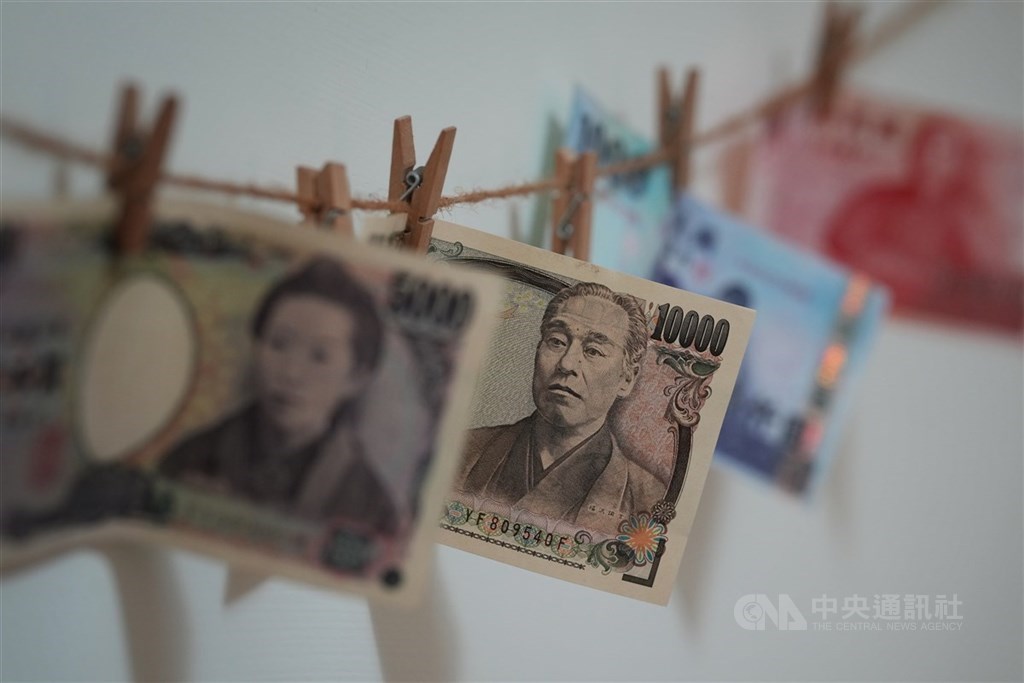
Taipei, June 25 (CNA) The Japanese yen has continued to weaken, recently falling below 161 against the US dollar. Japan's Finance Minister has hinted at intervention to support the currency in an effort to stabilize the market. While Taiwanese enjoying the yen's super-sweet exchange rate are delighted, Sun Ming-te, director of the Taiwan Institute of Economic Research's (TIER) Economic Forecasting Center, warns that the yen's slide reflects structural economic problems in Japan and is not a good thing, stating that "too much sweetness can lead to cavities."Sun Ming-te said at a TIER economic trend press conference today that international financial markets have recently seen increased volatility, with the US dollar index strengthening and much capital flowing into the US dollar and US Treasury bonds. At this time, two Asian currencies have shown particularly divergent trends: the Japanese yen and the Chinese renminbi. The yen continues to weaken, while the renminbi remains relatively strong.As the yen continues to hit new lows, Taiwan has seen favorable exchange rates. The Taiwan Bank's spot exchange rate for Japanese yen banknotes once reached a selling price of 0.199 this week, much to the delight of many planning trips to Japan who rushed to exchange currency and grab a bargain.However, Sun Ming-te cautioned that while the public welcomes the yen's favorable exchange rate, "too much sweetness can lead to cavities." After all, for a national economy, a continuously weakening exchange rate often reflects underlying structural economic problems.Sun Ming-te analyzed that Japan continues to run a trade deficit and a simultaneous deficit in its financial accounts. Meanwhile, US interest rates are over 3%, while Japan's are currently below 1%. This significant interest rate differential between the US and Japan leads foreign investors and Japanese citizens to borrow money for overseas investments, such as purchasing US stocks. "People might wonder, even though Japanese stocks are also rising, why not buy Japanese stocks?
Because buying US stocks not only offers potential gains but also an exchange rate advantage."Sun Ming-te pointed out that both on the trade and financial fronts, Japanese capital continues to flow out, exacerbating the yen's weakening trend.Although fans of Japan are happy to see the yen's favorable exchange rate, Sun Ming-te stated that the yen's depreciation reflects its economic problems and that it may continue to weaken. (Editor: Huang Kuo-lun) 1150625Stand with facts, and your every contribution is a force to protect press freedom.Download the CNA "One-Stop News" APP for real-time updates.The text, images, and audio on this website may not be reproduced, broadcast, transmitted, or used without authorization.